

The Sustainable Fashion Read on September
September gave us a particularly busy month across sustainable fashion.
From fashion weeks putting sustainability, circularity and creative reuse firmly on the runway to serious investment in the infrastructure needed to scale textile recycling, there was a lot happening across the industry.
What stood out was how much progress is now happening through connections — between brands and repair networks, resale and fashion culture, waste and design, technology and commercial production, and fashion and wider policy.
We’ve pulled together a breakdown of the key themes from the past month, and what they mean for the brands, innovators, designers and businesses shaping what comes next.

Image credit - @byjoshd
Fashion Weeks
New York, London, Milan and Paris Fashion Weeks put the industry’s biggest conversations in front of global audiences, while Sustainable Fashion Week UK and Manchester Fashion Week created their own spaces for sustainability, community and alternative approaches to fashion.
✷New York Fashion Week, London Fashion Week SS27, Milan fashion week, Paris Fashion Week all launched landing runways with designers doing things differently, catch the runway notes on Irigai page (insta or linkedin)
✷ The end of September kicked off Sustainable Fashion Week in the UK, running until 4th October, the theme is ‘Threads of Resistance’ - where there are events talking place across the UK - see the full schedule here.
✷ Milan Fashion Week launched with Vogue World - uniting the internet in outrage over robots on the runway, absurd integration - here’s what Vogue had to say.
✷ Manchester Fashion Week returned with a lot of momentum - incredible runway shows, panel talks and collaborative events. The event also had a ban on fur, along with feathers - see more here.
For sustainable fashion brands and designers, visibility increasingly comes from having a cultural point of view as well as a responsible product. September shows how runway moments can make circularity, upcycling and material choices part of fashion conversation when they are presented through design, personality and spectacle.
This creates an opportunity around how the work is framed. The product may be sustainable, but the cultural story around it is what makes people stop, understand and remember it. For emerging designers and biomaterial developers especially, fashion week can become a demonstration environment for what a material or circular model can actually look like in fashion.

Credit - Powder Kiss
Resale on + off the runway
September gave resale another step towards the centre of fashion culture. Archive, celebrity, curation, luxury, community and entrepreneurship are giving secondhand a much broader commercial and cultural identity.
✷ eBay opened New York Fashion Week with an archival American fashion auction, bringing designers like Marc Jacobs, Tom Ford and Donna Karan into the resale spotlight - see more.
✷ eBay returned for its third ‘Endless Runway’ show at LFW - archival pieces from the wardrobes of some of fashion’s most influential figures - check it out.
✷ In a global survey published by secondhand marketplace Fleek found that 28% resellers arrested doing so as their main occupation, with 33% reselling with that as the main goal - read the full report.
✷ Reunited Luxury has become the first luxury resale platform to achieve B Corp certification - read more.
✷ Depop has teamed up with Gabriella Karefa-Johnson for For the Girls - see more on the pop up.
For resale businesses, the opportunity is becoming more sophisticated. The market can grow through better infrastructure, but also through taste, trust, curation and cultural relevance. The brands creating value around secondhand are increasingly giving people reasons to engage with the model that have as much to do with identity and discovery as price.
For fashion brands and retailers, resale also creates a stronger question around what happens after the first sale. Take-back, resale and archive strategies can become part of the brand experience rather than an afterthought. For consumers interested in sustainable fashion, this means secondhand is becoming easier to encounter through the places they already look for fashion inspiration.
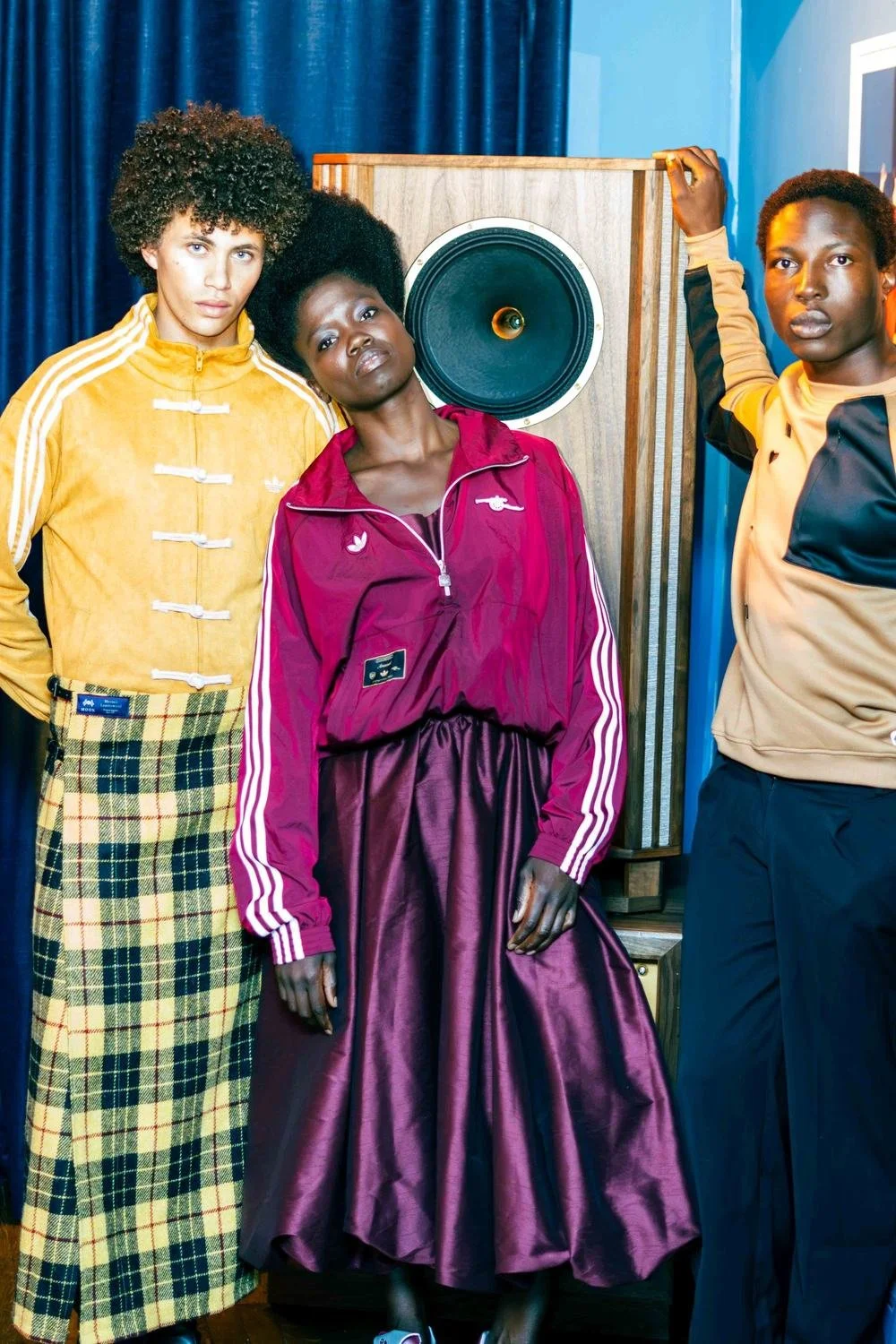
Eunice Olomide’s Upcycled Oxfam collection at LFW - image credit, Oxfam
Upcycling design briefs
September had some seriously good examples of designers being handed a pile of existing stuff and making something people actually want to wear. Upcycling reframes constraints as part of the creative brief. A sofa, an old racing garment or an unwanted material suddenly has provenance, texture and a story, and the designer has to figure out what to do with it, and holy hell this month they did.
✷ Eunice Olumide MBE showcased her new upcycled collection at the Oxfam runway as part of Second Hand September - it slayed hard, see it here.
✷ 46 emerging Central Saint Martins, University of The Arts London designers collaborated to rework McLaren Racing archive items into 12 runway looks - check it out.
✷ The winner of the Redress Design Award 2026, the world’s leading sustainable fashion design competition, was announced - congratulations to Jon Liesenfeld whose winning collection upcycled materials from a 15-year old sofa to car leather.
Existing materials are a source of creative direction rather than simply a sustainability exercise. Designers need to be able to imagine the material in a finished product. Technical performance matters, but so does texture, drape, colour, finish and the visual world it could create.
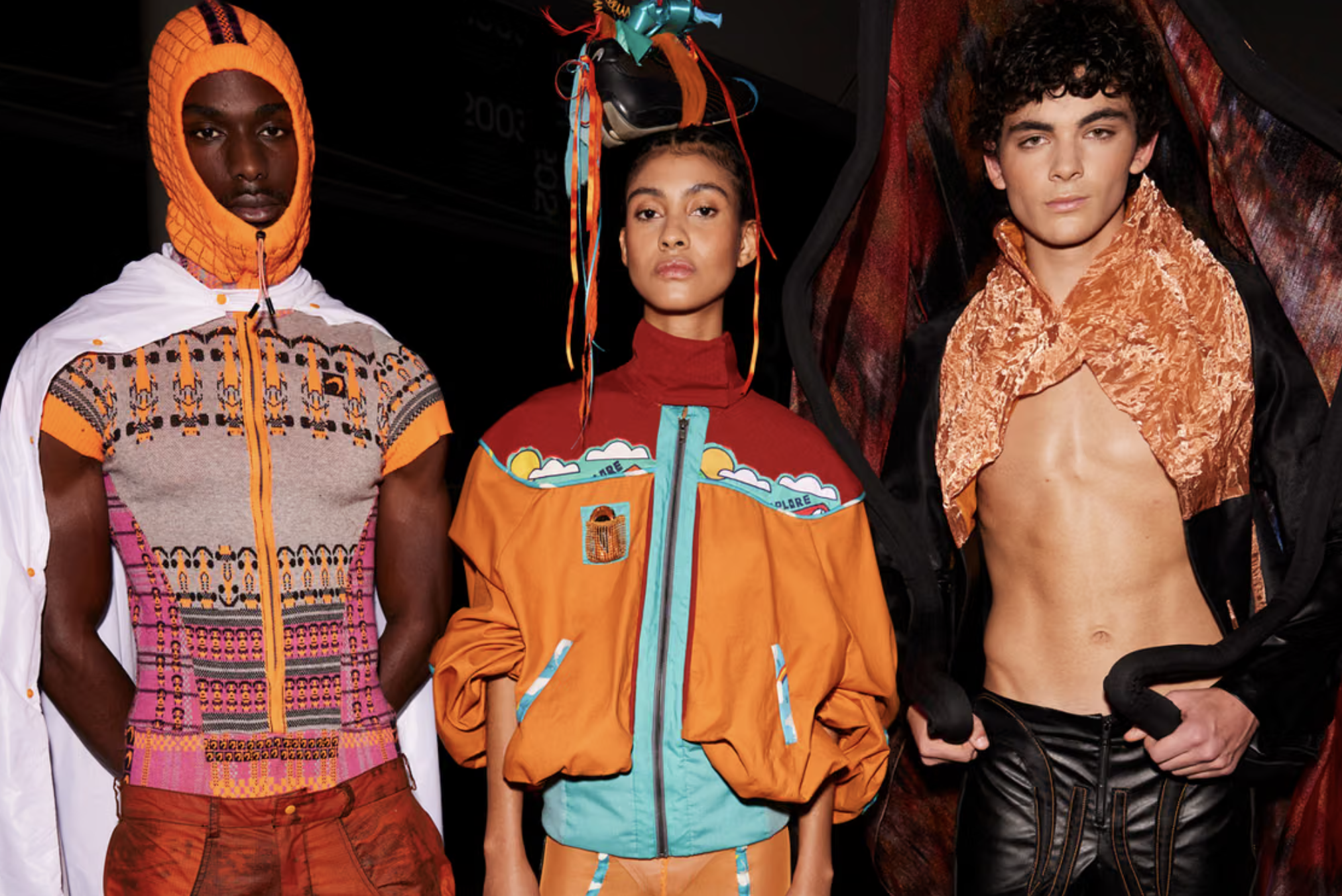
CSM students’ upcycled McClaren. Image credit - Hypebeast
Fur is becoming a very public brand/event decision
Fur had a particularly loud September.
✷ New York Fashion Week launched its first (new) fur-free season - read the details.
✷ Hundreds of anti-fur protesters marched in protest at Milan Fashion Week - Paris and Milan are the last two of the ‘big four’ fashion weeks yet to ban fur and feathers. See what happened.
✷ PETA activists who protested against use of wool at COS’s NYFW show, and H&M LFW show - catch what happened.
✷ Council of Fashion Designers of America (CFDA) CEO Steven Kolb physically restrained two protesters at the runway, who proceeded to press charges, following which he resigned. Full debrief.
Whatever your position on individual materials, the bigger point is that material choices are increasingly visible. Fur, wool, feathers and leather can now become part of a much bigger conversation about brand values, animal welfare, activism and audience expectations - particularly when the runway puts them in front of millions of people.
For designers and biomaterial developers, this creates space for alternatives that can give fashion the look, feel and performance it wants while opening up a different material story.
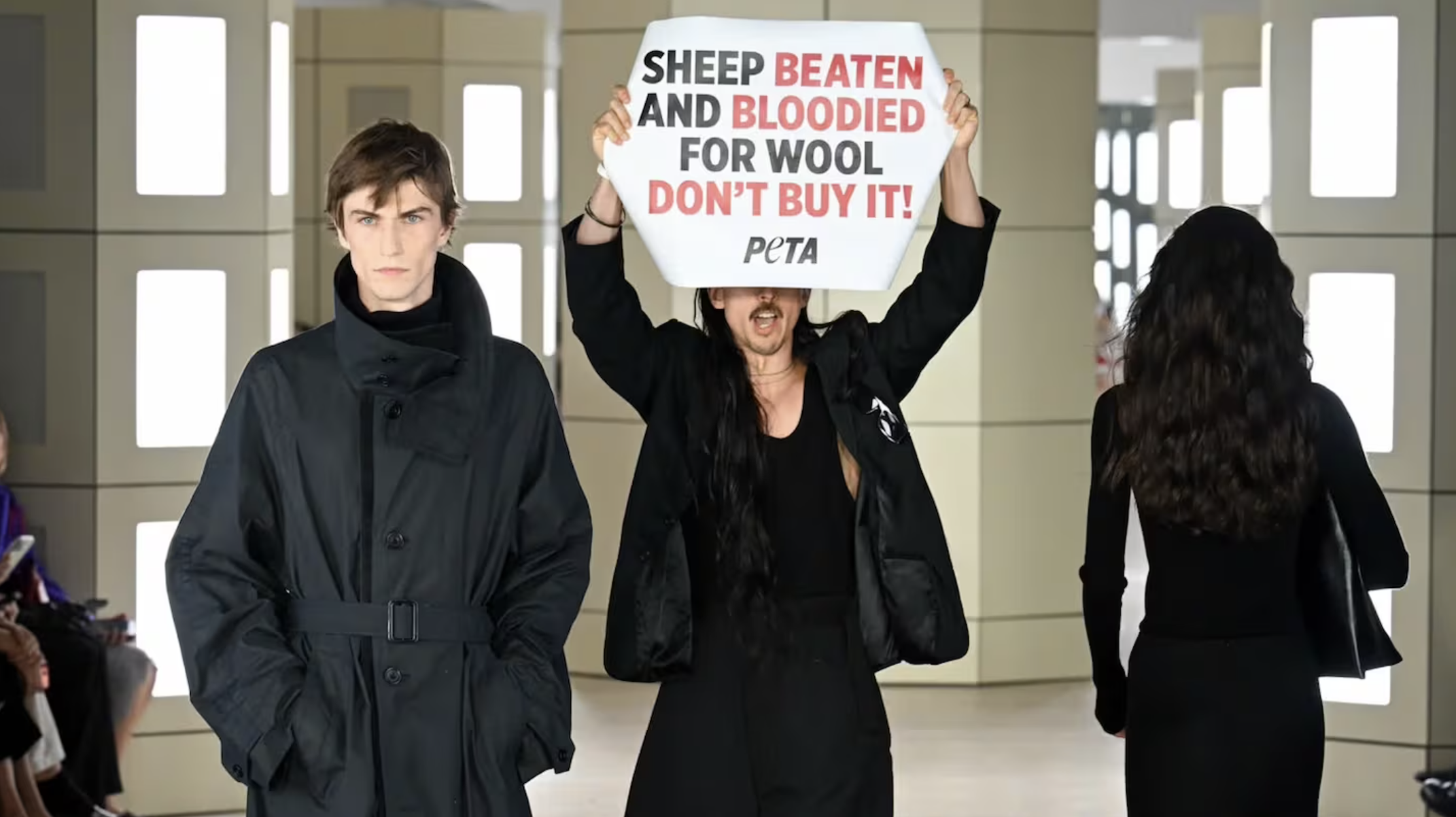
PETA at the NYC - Getty Images
Circularity is getting very good at making friends
Scale in terms of material development and more conscious ways of designing has always been an area where true possibility has often faltered. We’re seeing rapid change in that across various fields.
✷ New Look, Marks and Spencer, Sainsbury's and Oxfam have partnered to form The Circuit - a new project to build circular textile value chains from second-hand clothing - read all about it here.
✷ H&M has launched an online repair service with Save Your Wardrobe and REEKOM in France, with repairs viable for any brands, not just H&M - read all about it.
✷ Denim Deal have partnered with United Repair Centre to expand their presence and partnerships across European retailers and organisations - read more here.
✷ RE&UP Recycling Technologies cotton has powered a new Zalando collection - check it out.
✷ Chalhoub Group has joined Global Fashion Agenda, bringing one of the Middle East's biggest luxury retailers into industry-wide sustainability collaboration across brands, suppliers and regional markets. Full debrief.
For circular businesses and suppliers, partnership-readiness is becoming a commercial skill. Having the technology is one thing. Being able to explain exactly where you fit into a retailer’s existing system is another. For fashion brands, partnerships can unlock capabilities that would be difficult to build in-house, from repair and resale to recycling and reverse logistics.

Textile recycling has reached the ‘okay, but can you actually scale it?” stage
There is plenty of money and optimism moving into textile recycling. September also brought a useful reality check. The technology is progressing. The harder questions are increasingly around feedstock, economics, fibre blends, quality, infrastructure and whether brands are actually ready to buy the resulting materials.
✷ Textile-to-textile recycling technology company Ravel raised $8.2M in an oversubscribed seed funding round led by One Small Planet - see the full story.
✷ The global recycled polyester market has been projected to reach US$ 37.91 Billion by 2035 - read more.
✷ A new report by Circular Fashion News and Fashion for Good finds that textile recycling is still struggling to scale despite growing investment - read the report.
✷ Grand View Research, Inc projects the recycled denim fibre market will more than double by 2033 - see more here.
✷ Circulose is restarting commercial production at its Ortviken recycling plant in 2026, reviving one of fashion's most-watched textile-to-textile recycling facilities after securing new ownership and financing - deep dive.
✷ Kearney launched its Circular Fashion Index 2026, assessing 241 brands across 21 countries. A key finding is that 73–84% of brands now show moderate participation in circularity, but only 3 - 7% are deeply embedding it - read the full index.
For biomaterial developers, recyclers and textile suppliers, the proposition needs to get increasingly specific. Can you produce enough? At what quality? At what price? For which products? With what minimum order? And who is actually going to buy it?
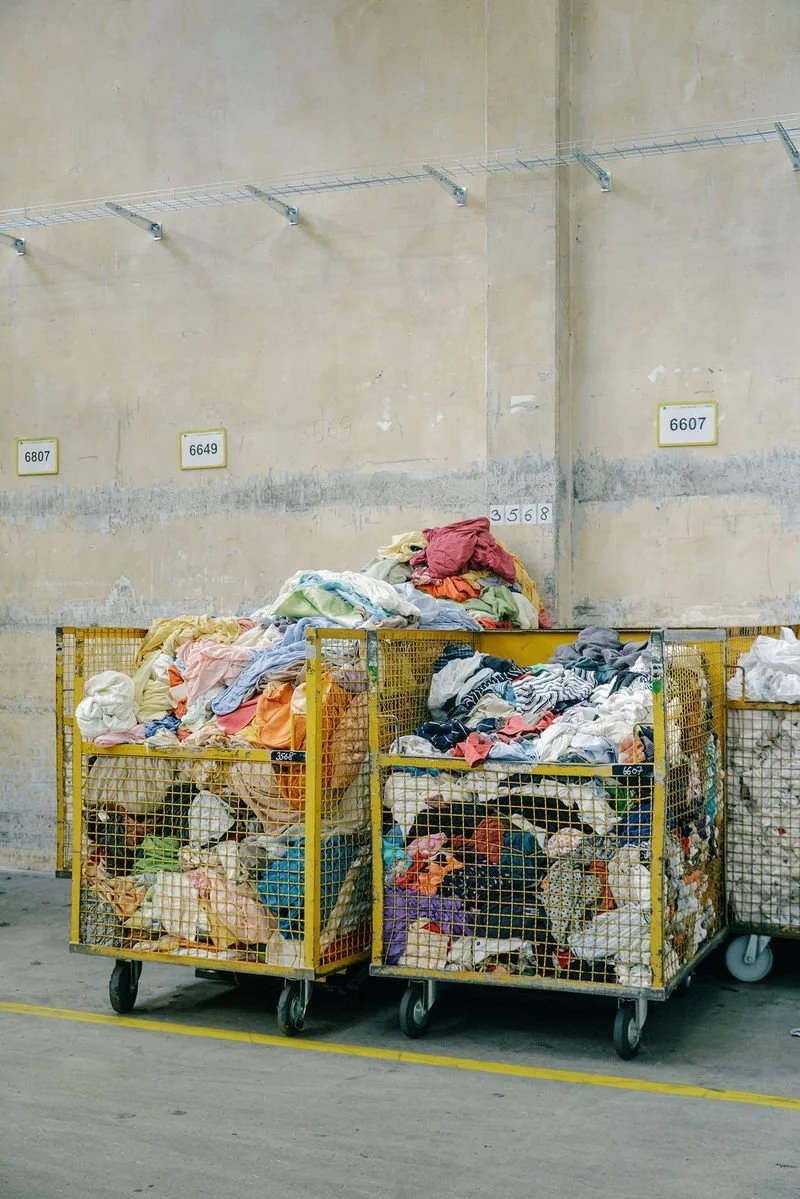
Image credit: Bloomberg
Circularity is escaping the fashion department
September delivered some delightfully random evidence that circular materials are finding their way into places you would not necessarily expect.
✷ Potholes are being repaired with recycled clothing (partly) as Maidstone Borough Council has piloted a small-scale experiment using road repair material made partly from discarded textiles - weird and wonderful in full here.
✷ Bristol became the first UK city to ban fast fashion adverts in public spaces - see the full story.
✷ Industry experts at Imperial College London predict the UK to be the global leader of the sustainable fashion movement - see how they came to this projection.
✷ France's implemented its legislation fining 'ultra-fast fashion' came into play, with brands such as Shein and Temu facing fines per garment which could reach almost €20 per garment by 2030, they are also now unable to advertise product - deep dive.
✷ India's Government e Marketplace (GeM) and the TEXTILES COMMITTEE - India have signed an MoU to support circular textiles, using public procurement to strengthen recycling, reuse and circular manufacturing at national scale.
✷ China has launched a new textile standards programme with over 300 new or revised standards across chemicals, carbon, traceability, and environmental accountability - deep dive.
Some of the biggest changes in fashion will happen in places that don't look particularly fashionable at all.
Where Irigai sits
At Irigai, we work at the point of translating sustainable fashion innovation and goals into a strategy which will land with those who will elevate them. We support founder-led brands, circular businesses and material innovators to turn complex work into clearer positioning, aligned communication and stronger commercial relevance.
September’s updates showed just how much sustainable fashion is moving beyond individual products and into the systems around them. Recycling needs infrastructure and buyers. Circular services need participation. New materials need commercial applications. And innovations need people to understand why they matter.
Irigai helps that work land with the people who can move it forward.