

October got practical, a little theatrical, and very well connected.
From resale going live (literally) to waste becoming couture, October gave us a month where the systems behind sustainable fashion finally got as much airtime as the clothes.
What stood out was how much of the news sat in the joins - between rental, repair and resale, between recycled fibre and the brands that need to buy it, between charity, community and commerce, and between designers and the law that governs what they can actually make.
We’ve pulled together a breakdown of the key themes from the past month, and what they mean for the brands, innovators, designers and businesses shaping what comes next.
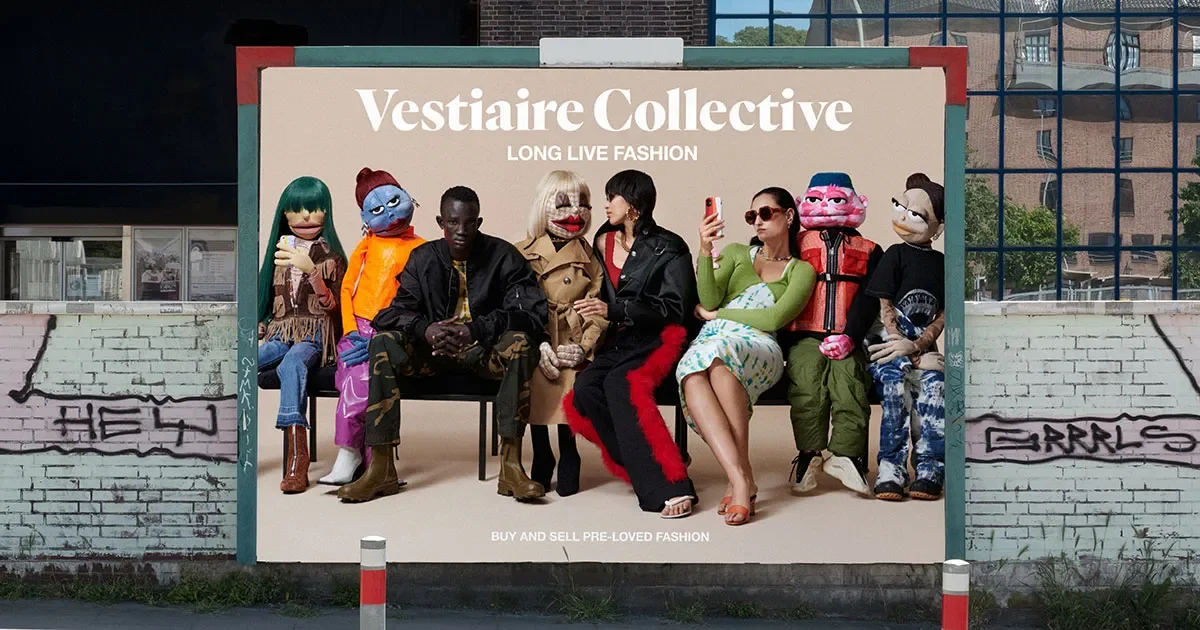
Vestiaire Long Live Fashion Campaign
Resale is showing up in more places, and having a bit more fun.
Secondhand is evolving in the main shop window, on live stream, and in the search bar of a whole new market.
✷ Patagonia has brought its resale collection Worn Wear onto its main website, meaning customers can shop new and used clothing in one transaction - see how they prioritise circularity.
✷ ThredUp held its first live-shopping show through live-commerce platform Whatnot, and Fleek recently found live-selling outperforms traditional selling by 79% - check it out.
✷ eBay’s 2026 Recommerce Report found 47% of surveyed consumers now buy secondhand at least monthly, up from 35% in its previous report, while 80% want products designed for longevity and repair - read the findings.
✷ Vestiaire Collective’s ‘Long live fashion’ campaign sent puppets sewn from discarded clothing down the runway, each representing a different ‘style tribe’ within luxury resale shoppers - watch it here.
✷ Nucha App collaborated with Leeds Beckett University on a pop up where people could resell live on the spot, while learning about the current state of charity and why we need a new way of combining circularity and philanthropy - see more.
✷ Rokit Vintage is supplying original vintage clothing for Rent the Musical’s 30th-anniversary West End production, bringing existing garments into the show - read more.
✷ Google searches in India for ‘thrifting’ and sustainable fashion have significantly increased in the past year - searches for ‘how to thrift’ rose 850%, and searches for ‘circular fashion’ rose 2,500% - see the data.
The common thread is access. Every one of these removes a step between someone and a secondhand garment (or between someone and the act of selling one).
New and used now share a basket - virtual or otherwise - resale has come a significantly wrong way, and impacts how a brand talks about its own products.
Resale is arriving through the places they already shop, scroll and search, and in new markets like India it’s arriving fast. Live selling in particular suggests that entertainment and community can do what sustainability messaging alone often can’t.

DHL x Absurd Laboratory
Upcycling: waste as the design brief (and the legal line)
Corporate waste streams are becoming creative briefs. October showed how good that can look, and where the boundaries sit.
✷ DHL and Hong Kong label Absurd Laboratory have transformed retired courier uniforms into fashion accessories, including a convertible bucket hat and bag, necklaces and clogs! It goes very hard - take a look.
✷ Louis Vuitton won €920K in an upcycling case against Kamad Reworked over its practice of cutting up authentic Louis Vuitton products and incorporating the materials into new clothing - read the ruling.
DHL and Absurd Laboratory show the other side: a corporate waste stream becoming a creative brief, with enough personality that people want to wear it.
For designers and upcycling labels, the Louis Vuitton case is one to watch closely. Upcycling branded or luxury pieces sits in a legal grey area, and a €920K outcome is a clear reminder that ‘it’s sustainable’ isn’t a defence.
Working with materials and waste streams you have permission to use, ideally through partnership with the brand or company that owns them.
For emerging designers, that’s an opportunity as well as a limit. Brands with surplus and a story to tell need creative partners, and the designers who can pitch a collaboration (rather than a workaround) will be the ones opening those doors.
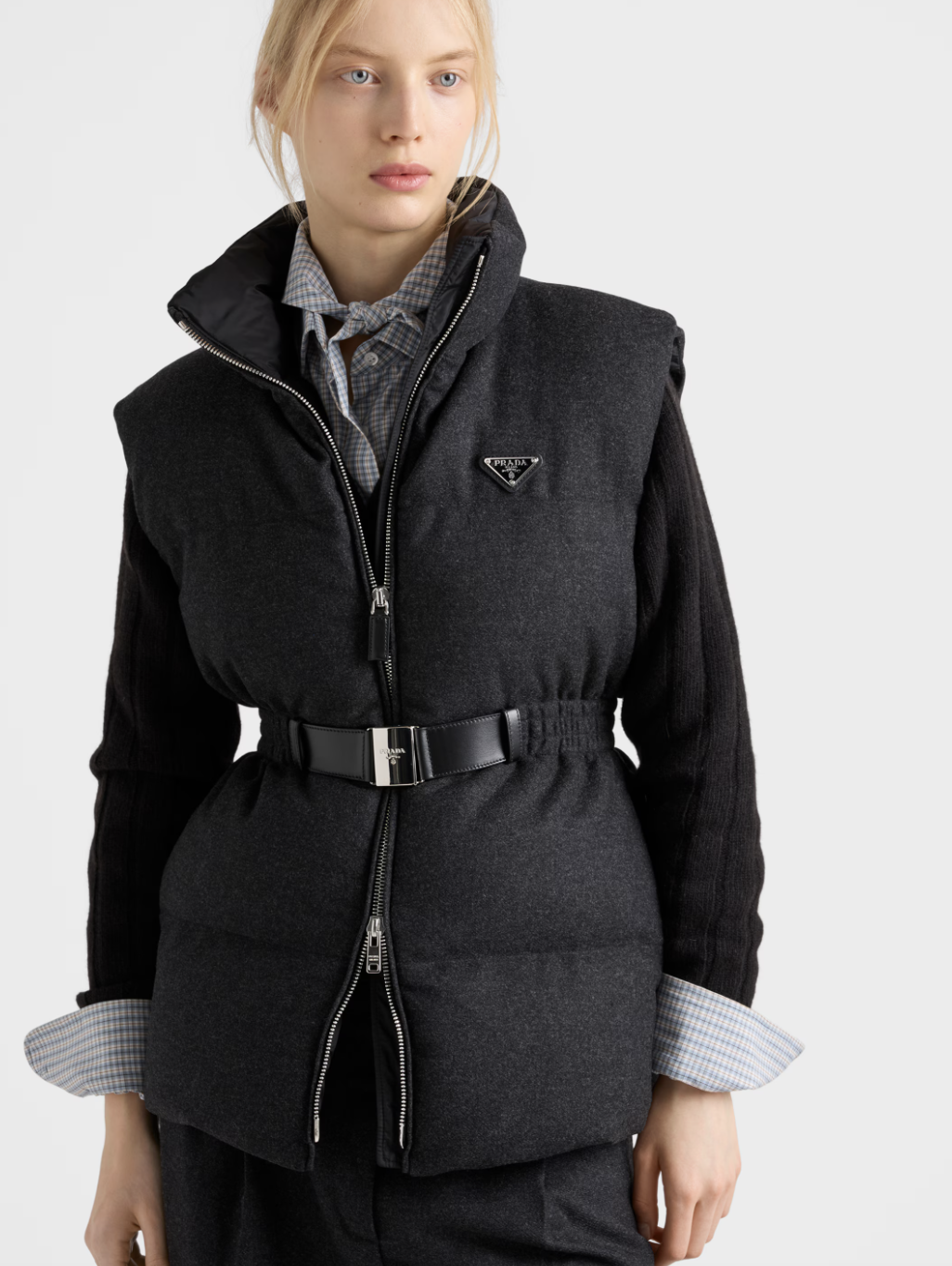
Prada Re-Wool down vest
Material innovation is meeting the spec sheet
October brings brand new fabrics, tested specifications and quieter process wins.
✷ Prada has introduced Re-Cashmere and Re-Wool, which turn production offcuts and leftover textiles into new yarns and garments, with NFC tags providing information on material sourcing and product authenticity - see the process.
✷ Circ® and Primark announced their partnership integrating textile-to-textile recycling into clothing, to scale the use of circular materials and reduce reliance on virgin polyester in its clothes - read about it.
✷ Fashion for Good has launched the Cotton Reloop Matrix with Reformation, C&A, BESTSELLER, Arvind Fashions Limited, Shahi Exports Pvt Ltd, Interloop Limited and Uster Technologies, testing recycled cotton against real-world brand specifications to tackle the quality and price barriers limiting wider adoption - see the project.
✷ Recover has launched ‘Recover One’, a range of recycled fibres designed to eliminate the need for additional overdyeing, cutting out a processing stage that adds cost, chemicals, water and energy - explore the range.
✷ ARMEDANGELS is expanding its plastic-free bouclé into more autumn/winter styles, replacing the polyester traditionally used to create the textured knit with wool and TENCEL™ Lyocell - see more.
Prada putting NFC tags into regenerated materials is a quiet but significant move. Provenance and authenticity are being built into the material itself, which is a step towards the kind of traceability that regulation (and savvier customers) are heading for.
For biomaterial developers, recyclers and suppliers, this is the language buyers are now speaking: spec, cost, process, minimums, compatibility.
If your material can show what it replaces, what it saves and how it slots into existing production, the conversation gets much easier. For brands, the opportunity is in joining testing programmes early, since that’s where the shared risk (and the first-mover credit) sits.
For designers, it’s a reminder that the most useful thing you can do with a new material is show how it behaves in a real product.
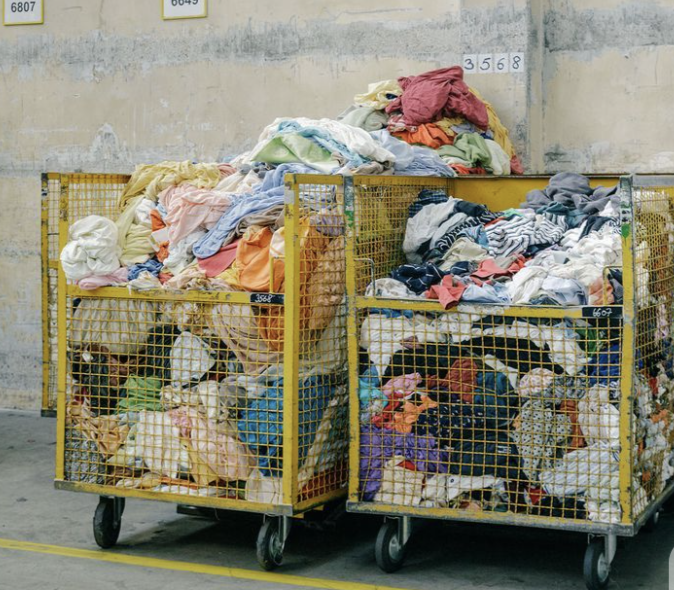
Tackling textile waste has bought global leaders together
Coalitions and legislation: who is building the system
The infrastructure conversation is moving from ‘somebody should’ to ‘here’s who’s doing it’, through government, retailers and brand coalitions.
✷ US Congress has proposed a Textile Waste Reduction Act to develop a national textile circularity strategy, improve waste data collection and coordinate federal action on textile waste - read about the bill.
✷ WRAP Textiles have launched a new textile collection programme with backing from Next, Primark and Tesco, with the aim of redesigning collection and sorting so more used clothing can be reused and more fibre recovered for recycling - see the programme and the wider plan.
✷ The Or Foundation, adidas, BESTSELLER, H&M and Inditex have formed the Apparel Recovery Coalition, aimed at improving producer responsibility, circular and responsible waste management - explore.
✷ Nike, Patagonia and lululemon have launched the Microfiber Action Alliance in partnership with The Nature Conservancy, bringing major brands together to tackle microfibre pollution from textiles - read more.
✷ Over 60 fashion leaders have joined The Climate Pledge’s fashion coalition, backed by Stella McCartney, Amazon and Canopy, convening support from the World Economic Forum to accelerate the commercial adoption of lower-carbon materials and production technologies - see the coalition.
On the policy and infrastructure side, a strategies across the globe are circling the same problem - used clothing needs somewhere better to go, and better data about where it ends up.
For brands, the commercial message is to get ahead of what’s forming. Better waste data, redesigned collection and national strategies are moving from discussion into structure, and the brands who understand what’s coming will be better placed than those reacting to it.
For anyone building a sustainability narrative, coalitions and pledges also raise the bar on how those commitments are communicated. Showing what you’re actually doing inside them is what will separate substance from association.
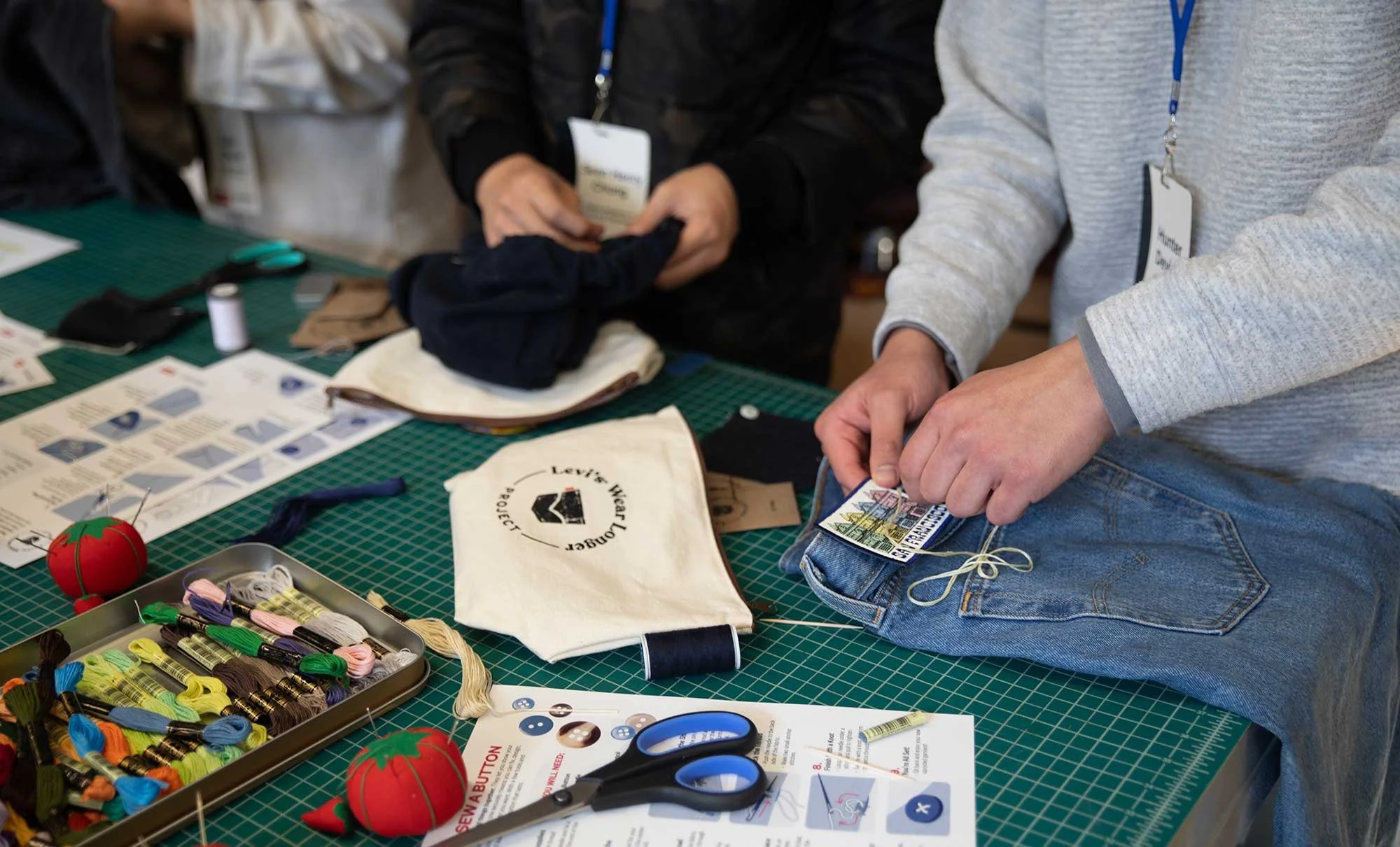
Levi’s Wear Longer in Action
Skills, support and credentials
Behind the headlines, October had a quiet but important run of programmes making it easier for people to actually do this work.
✷ Levi Strauss & Co. is bringing its Wear Longer Project to London and Paris - a clothing repair education initiative that has reached nearly 90,000 young people in the US so far this year - see the expansion.
✷ Bath Spa University and A SINGLE THREAD CIC have launched a four-year programme backed by The National Lottery Community Fund, developing community repair, swap and upcycling hubs designed to make sustainable fashion more accessible across the UK - explore.
✷ Nedbank is backing 20 South African fashion and textile SMEs through a 12-month accelerator with Fetola, helping sustainable businesses overcome funding, operational and market-access barriers to growth - read more.
✷ Sydney-based NAGNATA has achieved B Corp status - read their announcement.
Repair, swap and upcycling are being treated as skills worth teaching and infrastructure worth funding. Levi’s taking a repair education programme international is a good example of a brand investing in how people care for clothes after purchase, which is where a lot of a garment’s real-world impact is decided.
For people interested in sustainable fashion, community hubs and repair programmes offer practical ways in that don’t depend on buying anything.
Where Irigai sits
At Irigai, we work at the point of translating sustainable fashion innovation and goals into a strategy which will land with those who will elevate them. We support founder-led brands, circular businesses and material innovators to turn complex work into clearer positioning, aligned communication and stronger commercial relevance.
October’s updates showed how much of sustainable fashion now depends on connection. Rental needs repair and resale. Recycled fibres need brands willing to buy them. Upcycling needs partners and permission. Coalitions need people who can explain what they’re actually doing. And every one of those needs a story that the right people can understand, trust and act on.
Irigai helps that work land with the people who can move it forward.