

Nicol & Ford: proof of life, and the hidden love story
For Nicol & Ford, the body is to be adorned - their work begins in research and community, then moves through cloth. Each garment is made to order from locally sourced materials in their Newtown atelier, grounding the drama in handwork, tactility and proximity.
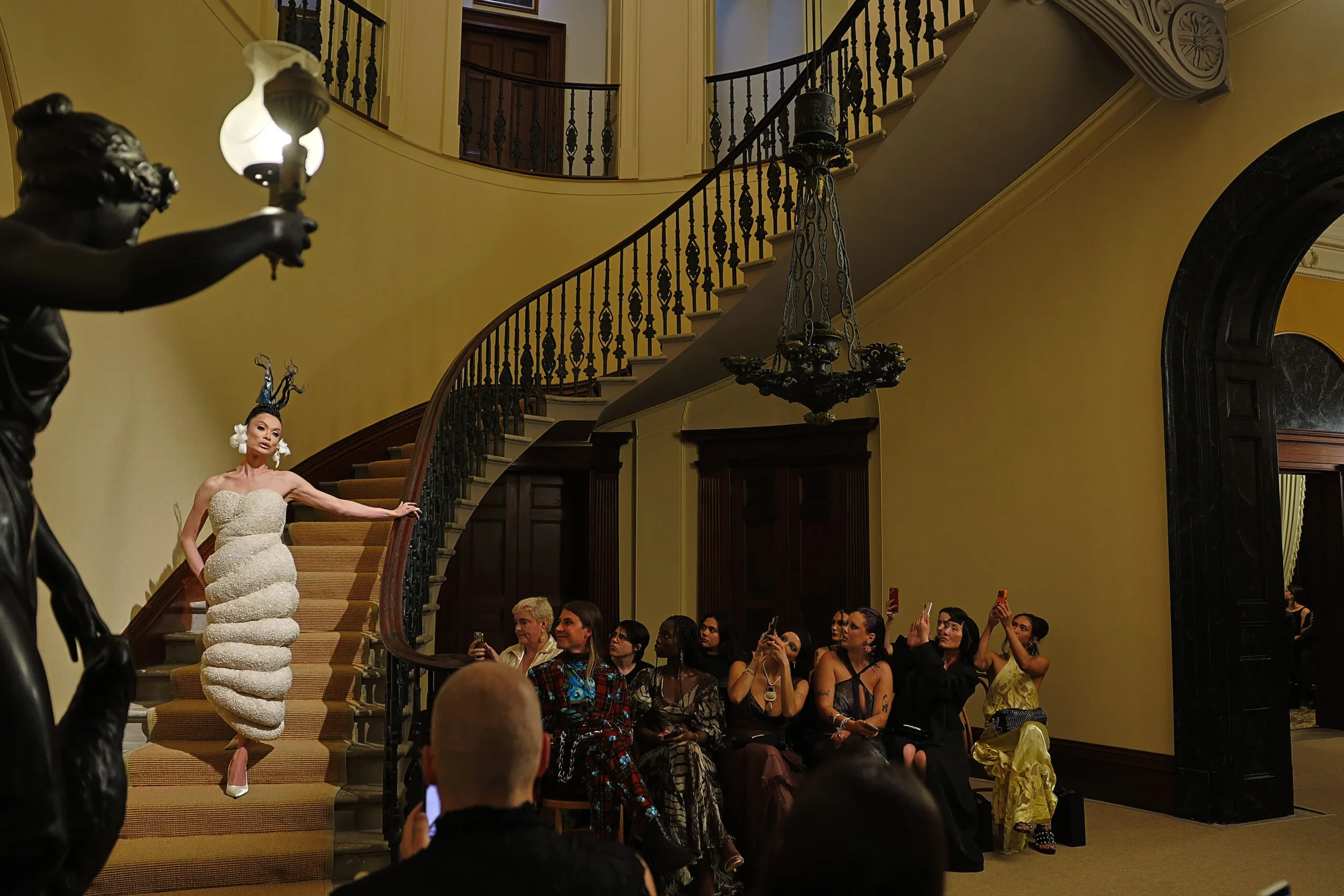
Photo Credit: Lucas Dawson for Nicol & Ford
Nicol & Ford describes their practice as rewriting history through silhouette, textile and texture, with ethical production centred through made-to-order local making, and that feels especially important here: the fantasy is not detached from how the clothes come into being.
At Elizabeth Bay House, Feint unfolded in chapters rather than looks. Models descended the spiral staircase and moved through the rooms while guests sat in rows of wooden chairs, surrounded by silks, feathers, florals and a kind of intimate theatrical charge.
Katie-Louise and Lillian Nicol-Ford tell Grazia that they often work this way, letting each section hold a different emotional register, and this first chapter, The Collectors, imagined the patrons of Australian artist Adrian Feint. It made the house feel like an archive being temporarily reanimated.
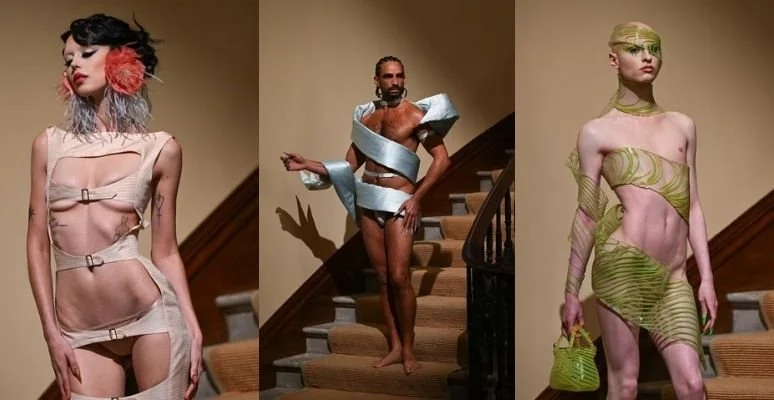
Image: Lucas Dawson for Nicol & Ford
‘Proof of life’ is the phrase that makes the collection click.
For Katie-Louise and Lillian Nicol-Ford, Feint’s still lifes were not passive decorative studies, but evidence of a private world: imagination, sexuality, domestic devotion and the flowers grown by his partner on the South Coast. Still life was not empty prettiness. It was cover, language, intimacy. So the collection’s florals became receipts. Signs that someone loved, lived, decorated, desired and left enough behind to be found.
That language moved through sculpture, movement and vibrancy. Florals nodded to Feint’s botanical world, but also to flowers long coded within queer history, including pansy” and “lavender”. Through sculptural pannier gowns, draped chiffon and hand-painted silks, Nicol & Ford turned those symbols into something theatrical and defiant: a language of fantasy, performance and queer survival that refused to stay hidden.
Nicol & Ford’s essentialises bringing overlooked histories back into the room, but Feint made that recovery feel collective. Fashion Journal notes that the collection was presented through community casting, reflecting the designers’ belief in centring lived experience and bringing communities into spaces that have historically felt inaccessible; the show was also built with close collaborators including Natasha Walsh, Phoebe Hyles, Amanda Testa, Tobias Sangkhul, Libby May and Julian Dimase.
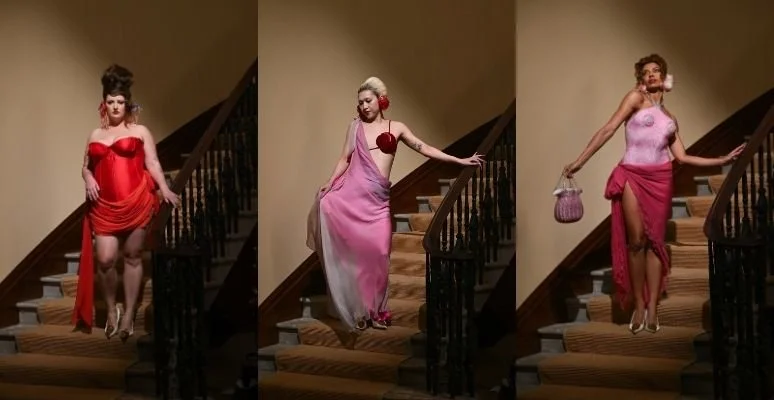
Image: Lucas Dawson for Nicol & Ford
‘Proof of life’ was not only about Feint. It was also visible in the people wearing the clothes, making the objects, painting the gowns, shaping the metalwork, cutting the florals, and filling the house.
Grazia note that ‘skin was as much the protagonist here as the fabric’, which feels exactly right. The body was framed, exposed, draped and amplified, never hidden beneath the drama. This is where Nicol + Ford’s sustainability is bigger than materials - made-to-order production, local making and hand craft sit inside a deeper refusal of disposability, community empowerment.
These are clothes made with narrative density, designed to hold history, performance, body and feeling at once.
Find more of our Australian Fashion Week breakdowns here.