

Australian Fashion Week: Irigai Perspectives
Our founder, Beth, spent the week in Sydney at Australian Fashion Week, moving between shows that each seemed to be testing a different answer to where fashion goes next.
Across the shows attended, sustainability showed up as a decision, a process, a material choice, a body in the room, a refusal to make clothes that disappear after one season.
The shows were thinking about what fashion can hold: memory, movement, identity, waste, intimacy, care, spectacle, contradiction.
Below we explore what stayed with us from the shows, and how individual designers and houses test the boundaries Australian fashion futures.
Nagnata
Nagnata made performance feel less like like breath, fibre and skin.
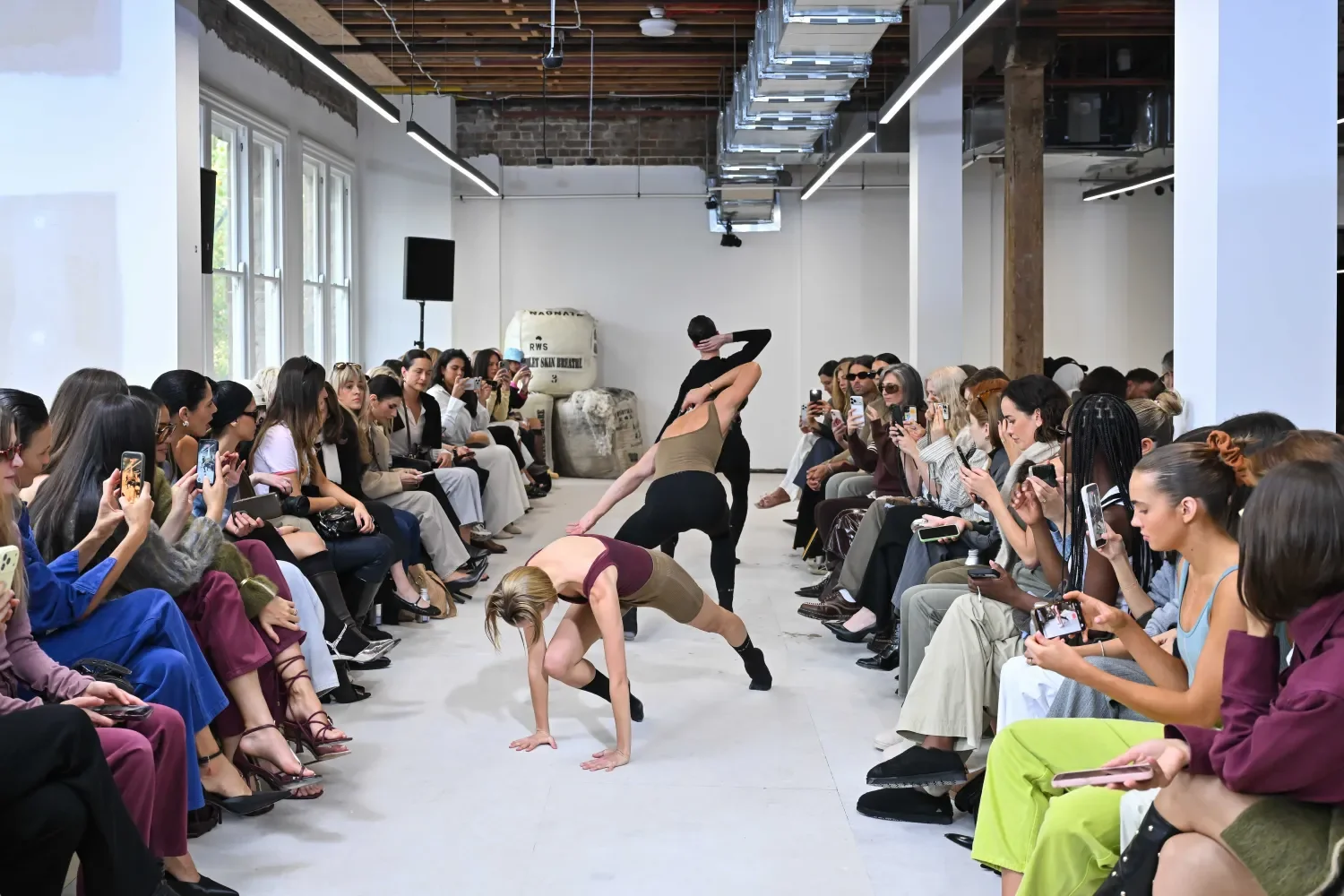
A quieter show, but one that pushed hard against the synthetic logic activewear still depends on.
FDS The Innovators
Explorations of what’s been before, and arguments for what comes next.
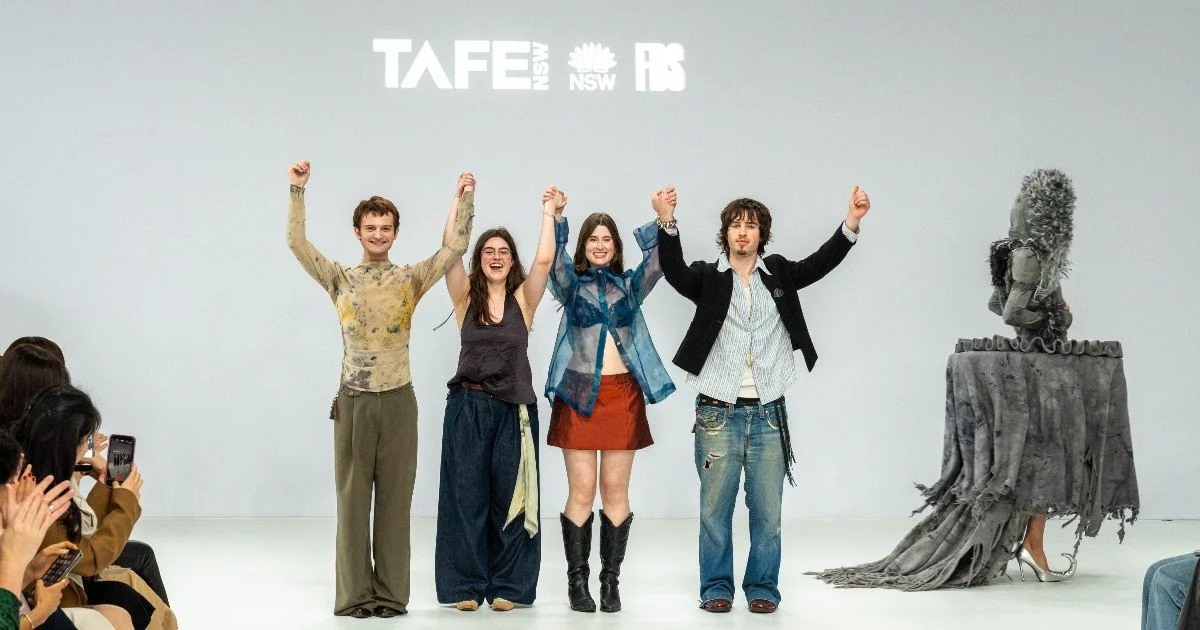
Deadstock, buried cloth, natural dyes, damage, ghosts, and young designers refusing to make waste look polite.
Nicol & Ford
Something much deeper than romance.
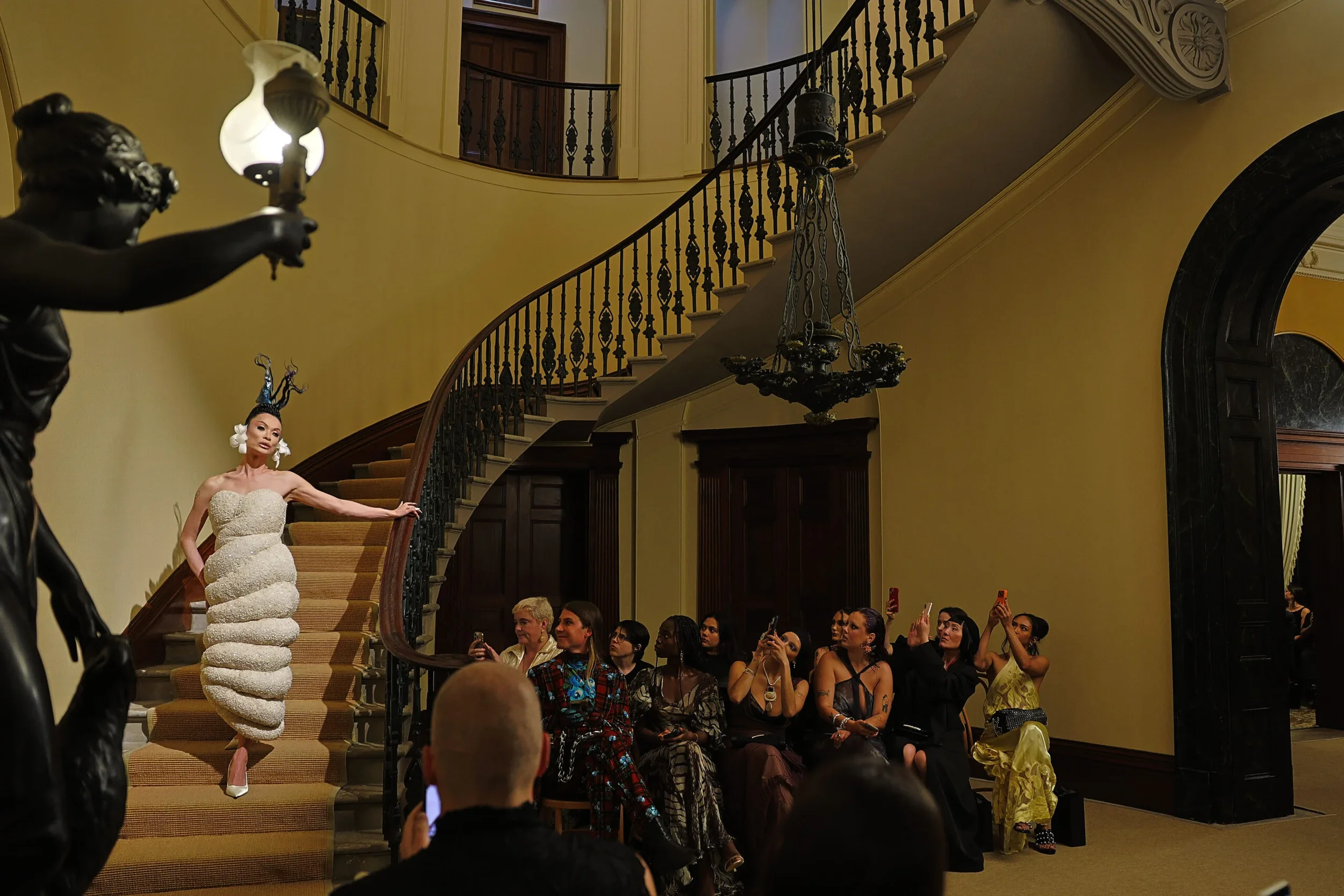
Coded history, queer survival, made-to-order fantasy and proof of life.
Gary Bigeni
Loud, personal longevity.
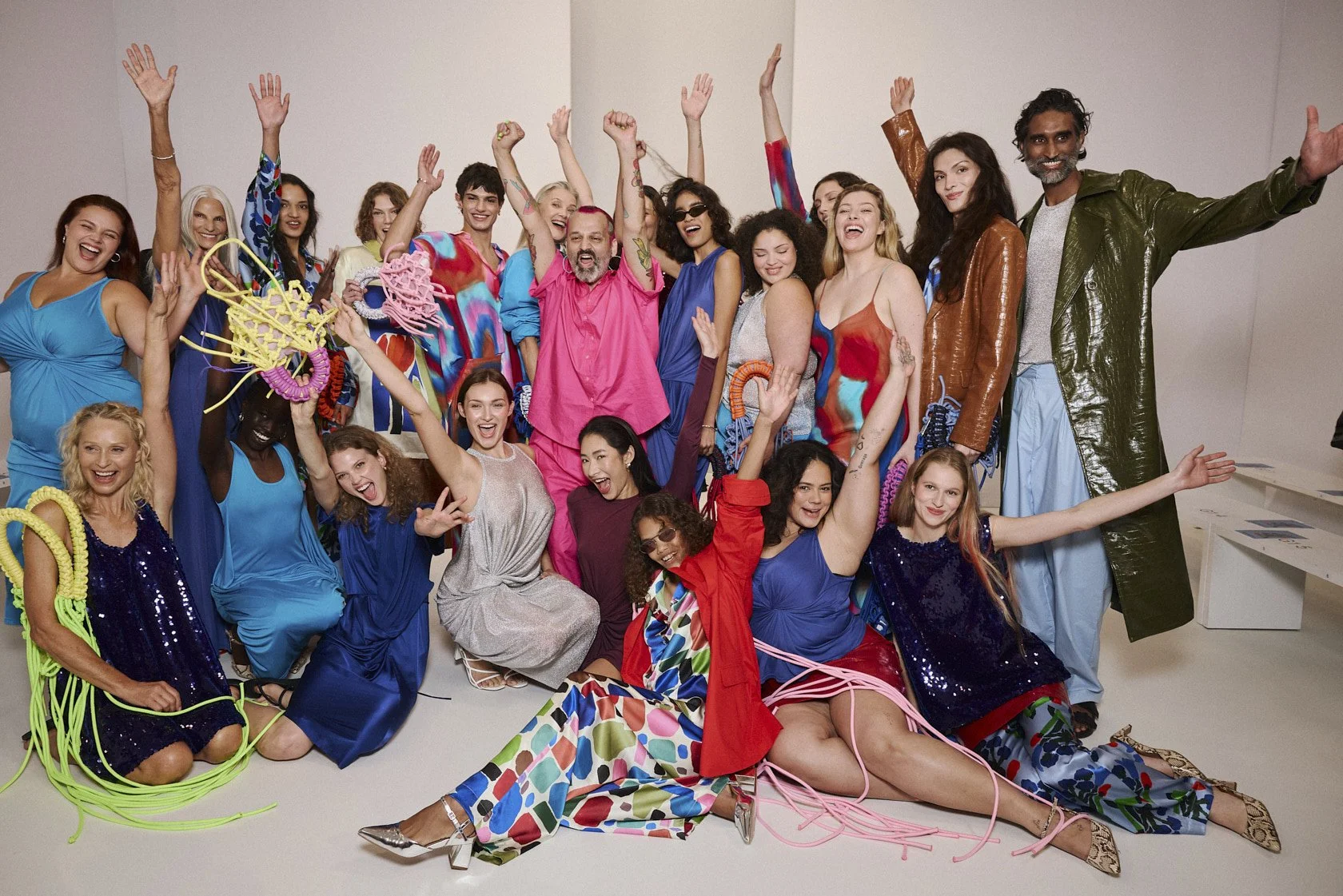
Shared codes and vitality connecting bodies without uniforms.
Iordanes Spyridon Gogos
A real fire alarm, and clothes that refused to resolve neatly.
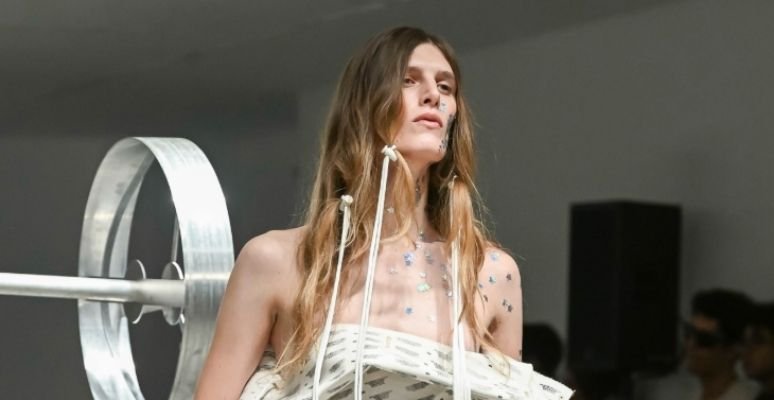
The wrong fastenings, bodies interrupting logic, imperfection adornment.
Sustainable fashion isn’t a story of better materials. At its most interesting, it is about how clothes are made meaningful enough to stay: through fibre, craft, repair, casting, community, memory, performance and the systems that sit behind the final image.
That is where Irigai works.
Through creative strategy, we help sustainable fashion, circular economy and material innovation brands translate what they do into something people can understand, desire and believe in. Not by flattening sustainability into clean language or beige restraint, but by building sharper stories, stronger positioning and creative systems that hold up commercially and culturally.
The future of fashion will be shaped by the ones that know how to make better systems feel like something worth belonging to.

Beth Arthurs, Founder of Irigai