

Gary Bigeni: shared life and abundance
In the lead-up to the runway, Gary Bigeni described the collection as reflective rather than ‘new’, saying that nothing is really new, only reimagined through a different shape, mood or moment.
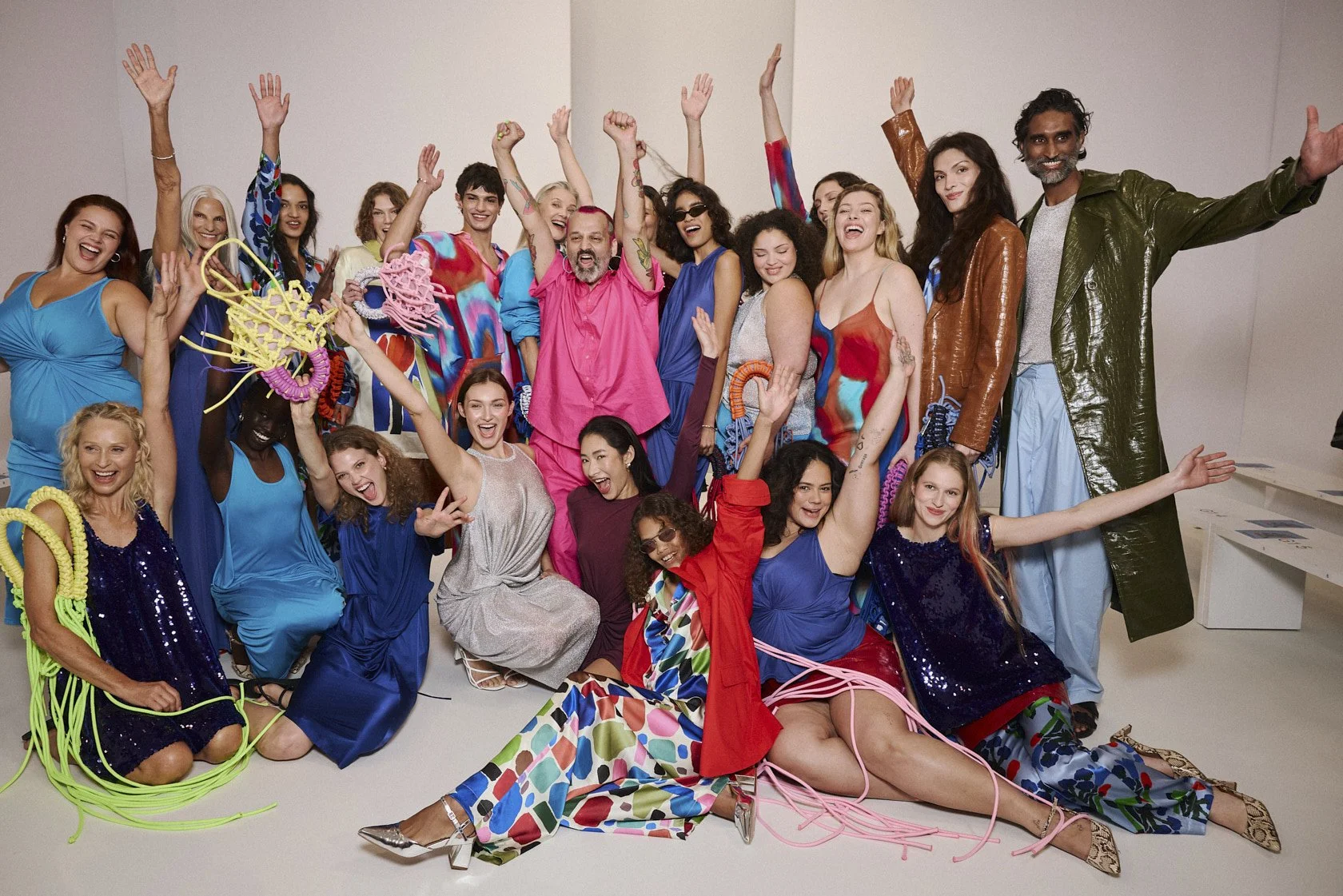
Photo Credit: Jack Bennett / Tommy Nortz
On the runway, that personality was everywhere. Abstract updates to his signature polka dots moved across styles, echoing the designer himself: electric pink hair, black spots, and a kind of joyful visual punctuation that made the collection feel deeply personal.
That sense of shared identity carried through the collection. A bold floral graphic appeared across different garments and placements, becoming a visual anchor between looks. It worked almost like a community marker: one motif, many expressions. The repetition made difference feel connected.
On one body, the floral motif read as infinitely soft and generous. On another, it became graphic, almost confrontational - a very deliberate, focused statement. Across tailoring, drape, sheer layers and more relaxed silhouettes, the same motif kept subtly elevating or nuancing personality without losing its sense of belonging. Important in a show with such visible diversity across size, age and presence. A shared visual language to hold many people at once, and celebrate how we share and differentiate identity through one anchor.
This feeling made the collection feel less like a room of people connected by a common code. Kinship. A way of saying that community doesn’t require sameness, it needs recognisable points of connection that still leave room for personality, scale, softness, loudness, confidence and contradiction.
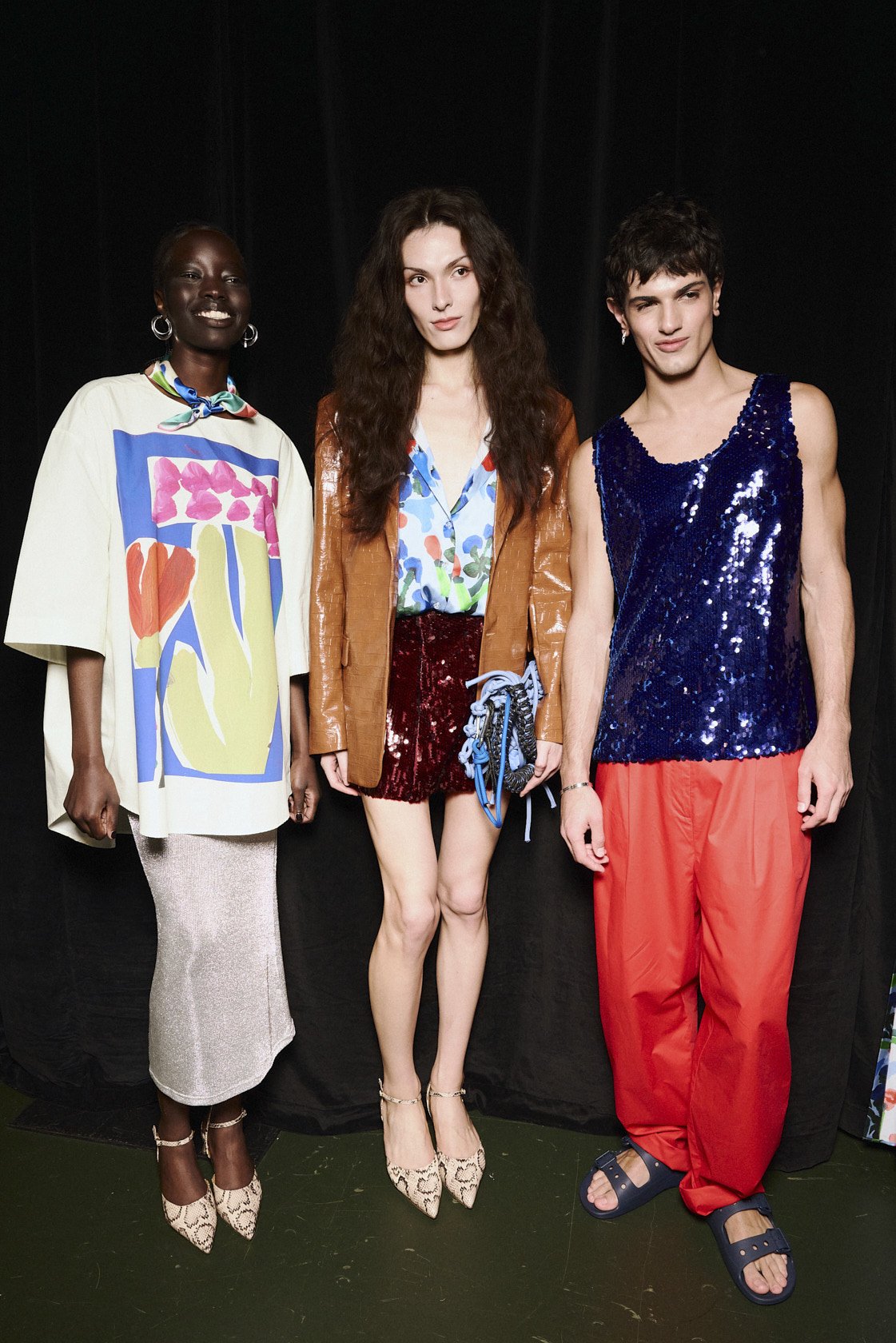
Photo Credit: Jack Bennett / Tommy Nortz
The palette had that same generosity of experimentation. Bright red, tan brown, pastel and cobalt blue balanced soft cerise, green and ivory, while hypnotic concentric dye work broke up stark colour blocking between looks and layers. Sequins bounced in the light. Sheer metallics caught movement. Sharp tailoring sat beside wraps, drape-adjacent cut-outs and contrast layering. There was respect for the demure and the daring all at once, clothes that understand softness without becoming quiet.
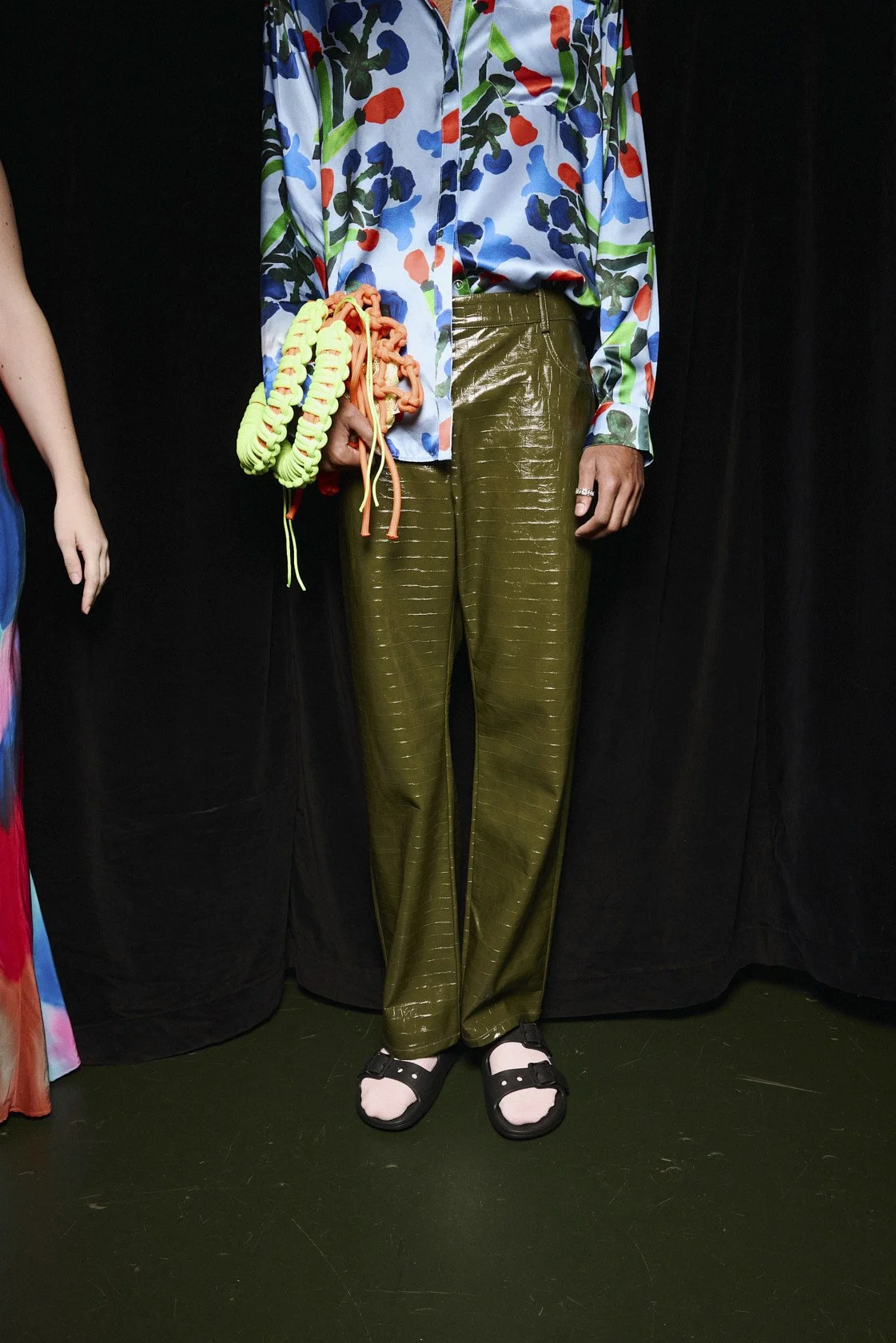
Photo Credit: Jack Bennett / Tommy Nortz
Bigeni offered a different proposition on sustainability - clothing made slowly enough to carry identity. Pieces made to order, made with feeling, made to last because they are allowed to belong to someone fully.
Hand-painted onto ethically sourced cotton, produced in limited runs, a sustainability position that doesn’t arrive through restraint, but abundance. Print, softness, movement, colour and clothes made for the distinctive energy of the wearer.
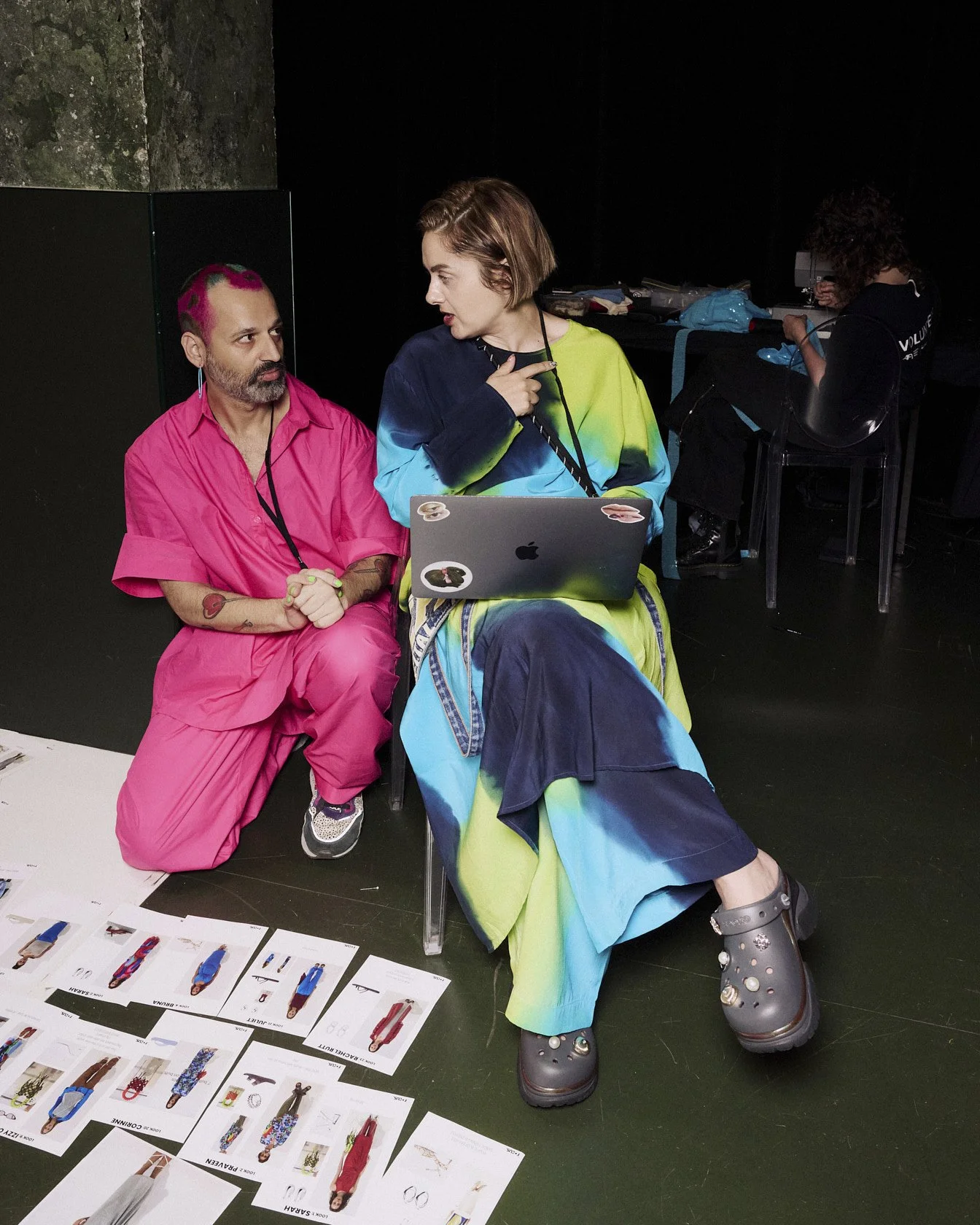
Photo Credit: Jack Bennett / Tommy Nortz
Find more of our Australian Fashion Week breakdowns on sustainable fashion here.